Room booking management: making better use of public spaces in local authorities
Room booking can quickly become a headache: save time, make the most of your spaces and give residents a simple, fast booking process.
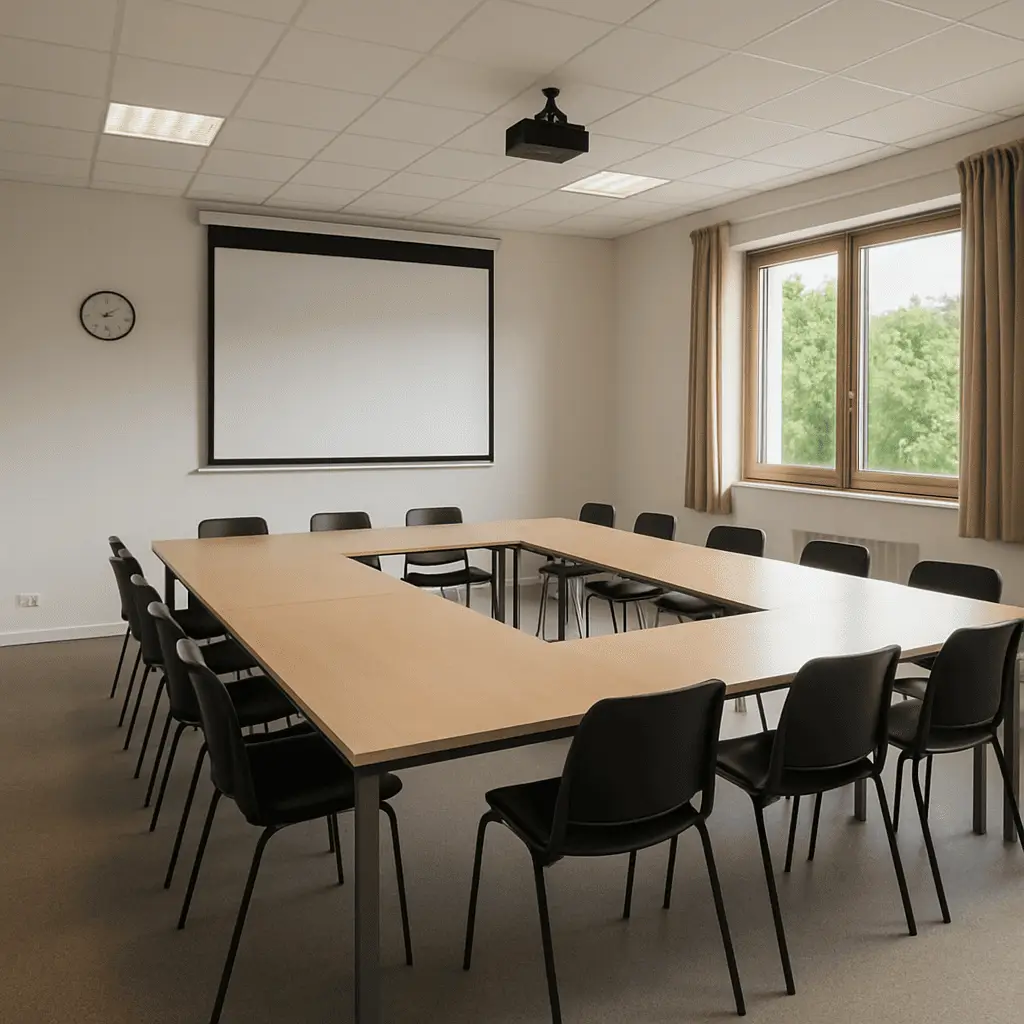
Moving from an Excel spreadsheet to a collaborative digital solution makes room booking easier for staff and for citizens alike.
Multipurpose halls, gyms, spaces for local associations, meeting rooms… In every local authority, these venues are at the heart of local life. They host association meetings, sporting events, weddings and conferences.
Behind this richness, however, lies a daily reality: organizing bookings efficiently is complicated. Between the variety of requests, the number of people involved and the logistical constraints, management can quickly become a real headache. All too often, it still relies on phone calls or e-mails, with the attendant risk of errors, double bookings or delays.
To meet these challenges, more and more local authorities are choosing digital booking management solutions. These centralize requests, give a clear view of scheduling and bring transparency to residents and staff alike.
Room booking: multiple challenges for local authorities
Managing room bookings is not simply a matter of assigning a free slot. It is a constant balancing act. Municipal departments have to juggle a wide variety of users (associations, schools, sports clubs, businesses, private individuals) and meet needs ranging from one-off use to regular bookings.
Added to this are the constraints and technical knowledge of the venues: capacity, accessibility for people with reduced mobility, available equipment, safety standards… Not to mention the time needed to carry out an inspection between two bookings.
Certain times of year, such as the start of the associations’ season in September, wedding season or elections, bring heavy demand. Without a suitable tool, these peaks can put departments under strain and degrade the experience for residents.
The limits of a manual system for managing rooms
In many town halls, room booking still relies on a manual system: a paper diary, a spreadsheet or a shared file. This way of working has its limits. Availability is not always up to date, requests pile up by phone or e-mail, and coordination between departments becomes tedious.
As a result, errors can occur, such as a double booking or forgetting important logistical instructions. Looking for information takes time and ties up staff who could be devoting themselves to higher-value tasks.
The benefits of a digital room management tool
Putting a digital solution in place makes work easier to organize. Schedules are centralized, updated in real time and accessible to staff and residents alike. Booking becomes simpler: a few clicks are enough to choose a slot, check the terms of use and receive a confirmation. What is more, the configuration lets local authorities keep control over bookings with an approval system.
For the local authority, the tool also makes it possible to build in priority rules (for example, reserving certain slots first for local associations), apply the corresponding rates, make recurring bookings easier to manage and produce annual reports.
The data collected gives a clear view of how spaces are used: occupancy rate, quiet periods, types of users. This information is essential internally for organizing staff work, particularly preparing the rooms.
Citizens can check availability online and book without waiting for the town hall’s front desk to open. The experience is smoother and more transparent, and satisfaction rises accordingly. The information is clear from the outset: room capacity, available equipment, rules of use.
It is a convenience and a time saver. It speeds up the handling of requests and strengthens trust in the local authority, which appears more modern, more organized and more attentive to its residents’ needs.
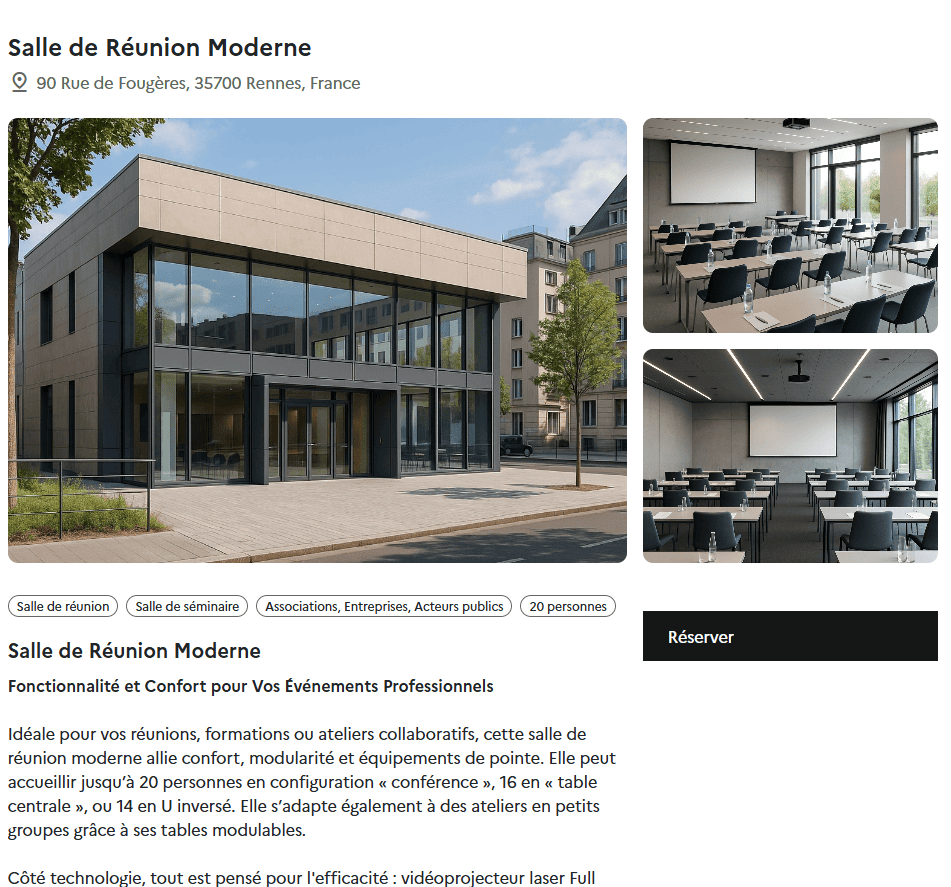
Best practices for a successful transition
For a booking management tool to be fully effective, a few principles should be followed:
- Centralize all requests in a single system, accessible to the various departments.
- Train staff so they master the features and can guide residents.
- Communicate widely about the new procedure to encourage its adoption.
These steps ensure a smooth rollout and optimal use.
Conclusion
Room booking management is a strategic investment to improve internal efficiency, make better use of facilities and offer citizens an easier, more accessible service.
By modernizing this function, local authorities give themselves the means to make the most of their public buildings, meet growing expectations for speed and simplicity, and strengthen the relationship of trust with their residents.